Updates:Ambala Chandigarh Highway Read More
x
S
h
a
f
a
q
I
n
t
e
r
n
a
t
i
o
n
a
l
- Chandigarh City Center
- info@shafaqinternational.com
- Mon _ Sat: 9.00 to 18.00


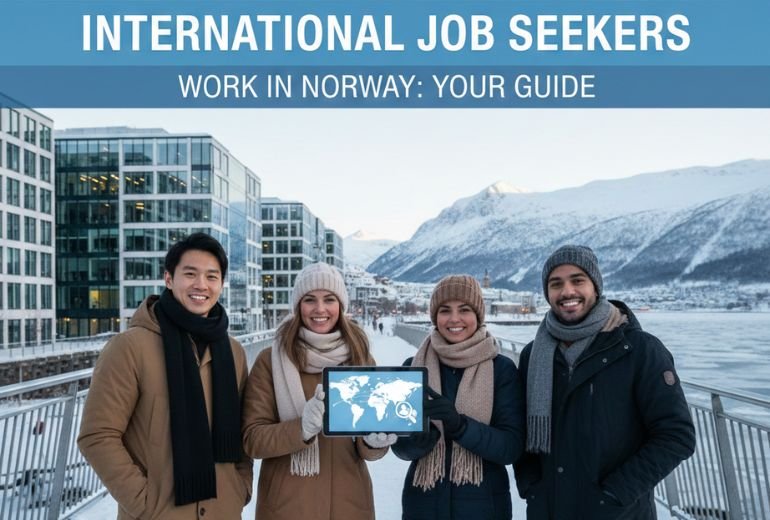
Norway 🇳🇴 is one of the most desirable destinations for international professionals seeking high‑quality jobs, excellent work‑life balance, and strong social benefits. With a stable economy, advanced industries, and a high standard of living, it attracts talent from around the world. This article outlines how international audiences can find jobs in Norway, what visa and work permit rules apply, the main sectors hiring foreigners, expected salary ranges, and practical tips to succeed in the Norwegian job market.
1. Why Consider Working in Norway?
Norway offers many attractive features for international job seekers:
- 🌍 High salaries compared to many countries
- 🏥 Comprehensive healthcare & social benefits
- 📚 Strong worker protections and regulations
- 🪩 Excellent quality of life and work‑life balance
- 📈 Demand in key sectors like IT, engineering, healthcare, and renewable energy
The country is known for its safety, social welfare, and a progressive working environment. Many global talents see Norway as an opportunity to grow professionally and personally.
2. Work Permits & Visa Requirements for Foreign Nationals
Before you can work in Norway, you must understand the visa and work permit requirements:
2.1 Skilled Worker Visa
The most common route for professionals from outside the EU/EEA. To qualify:
- You must have a job offer from a Norwegian employer.
- The job must be full‑time and relevant to your qualifications.
- You must meet minimum salary thresholds set by the Norwegian Directorate of Immigration (UDI).
Salary Thresholds from September 2025
Starting 1 September 2025, Norway revised salary requirements:
- 📊 Bachelor’s degree roles: at least NOK 522,600/year (~€45,200)
- 📊 Master’s degree roles: at least NOK 599,200/year (~€51,800)
Lower salaries may be accepted if you can prove they match local standards for that occupation.
2.2 Job Seeker Visa
This visa allows skilled professionals to stay in Norway for up to 6 months while looking for a job. It’s especially popular for IT, healthcare, and skilled tradespersons. If you secure a job while on this visa, you can convert it to a work permit.
2.3 Seasonal & Other Work Permits
For certain sectors like tourism, agriculture, and fisheries that have peak seasons, seasonal work permits are available. These are temporary but can still provide valuable experience that helps in longer‑term applications.
2.4 Work Permit Process Timeline
Typically, the entire process takes 60–90 working days, including document processing, visa appointment, and residence card issuance once approved.
3. Top Sectors Hiring Foreign Talent in Norway
Norway’s job market has strong demand in specific industries where international workers are often recruited:
3.1 Information Technology (IT)
Norway’s tech sector is booming with demand for software developers, data analysts, cybersecurity experts, and cloud professionals.
💼 Common Roles:
- Software Developer
- Full‑Stack Engineer
- Data Analyst
- DevOps / Cloud Specialist
💰 Salary Range: NOK 500,000–900,000/year (~$50,000–$90,000) for experienced professionals.
Why IT? The digital transformation is a priority for many Norwegian businesses, creating long‑term opportunities for skilled tech workers.
3.2 Engineering
Engineering remains one of the most promising fields for foreign workers.
💼 Common Roles:
- Mechanical, Electrical, or Civil Engineer
- Environmental Engineer
- Project Manager
💰 Salary Range: NOK 600,000–900,000/year for qualified engineers.
Both infrastructure development and renewable energy projects are driving demand for engineering talent.
3.3 Healthcare
With an aging population and an emphasis on public health, Norway needs healthcare professionals.
💼 Common Roles:
- Nurses
- Doctors
- Physiotherapists
- Caregivers
💰 Salary Range: NOK 450,000–700,000/year (specialists can earn more).
Note: Many roles in healthcare require Norwegian language proficiency (B2 level or higher) and local registration.
3.4 Construction & Skilled Trades
Infrastructure and construction projects continue across Norway, increasing demand for skilled trades.
💼 Common Roles:
- Electricians
- Plumbers
- Construction Managers
- Welders
💰 Salary Range: NOK ~450,000–800,000/year depending on experience.
3.5 Renewable Energy & Sustainability
Norway leads in clean energy projects, including hydroelectric, wind, and solar energy.
💼 Common Roles:
- Renewable Energy Technicians
- Environmental Consultants
- Project Coordinators
💰 Salary Range: NOK 500,000–800,000/year.
These jobs are attractive to professionals passionate about sustainable technologies.
3.6 Education & Research
Norway’s universities and research institutes welcome academic experts and lecturers.
💼 Common Roles:
- University Lecturers
- Researchers
- Laboratory Experts
💰 Salary Range: NOK 400,000–800,000/year.
3.7 Tourism & Hospitality
With its scenic landscapes, Norway’s tourism sector offers opportunities in service and management roles.
💼 Common Roles:
- Hotel Managers
- Tour Guides
- Chefs
- Hospitality Staff
💰 Salary Range: NOK 300,000–500,000/year.
Tourism jobs might be more accessible for candidates with strong customer‑service experience.
3.8 Finance & Business Services
Norway’s financial sector also hires international talent in accounting, auditing, risk management, and consulting.
💼 Common Roles:
- Financial Analyst
- Auditor
- Business Consultant
- Risk Manager
💰 Potential Salaries: $90,000–$120,000/year for senior roles in finance.
4. Salaries in Norway – What to Expect
Salaries in Norway are generally higher than many other countries and reflect the high cost of living. Below is an approximate summary:
| Sector | Entry‑Level (Annual) | Mid‑Level (Annual) | Senior (Annual) |
|---|---|---|---|
| IT | NOK 500,000 | NOK 700,000 | NOK 900,000+ |
| Engineering | NOK 600,000 | NOK 750,000 | NOK 900,000+ |
| Healthcare | NOK 450,000 | NOK 600,000 | NOK 800,000+ |
| Skilled Trades | NOK 450,000 | NOK 580,000 | NOK 800,000 |
| Finance | NOK 600,000 | NOK 900,000 | NOK 1,200,000+ |
| Tourism | NOK 300,000 | NOK 400,000 | NOK 500,000+ |
Note: Salaries are pre‑tax and Norway’s tax rates are relatively high, but they fund public services like healthcare, education, and infrastructure.
5. How to Secure a Job in Norway (Step‑by‑Step)
Step 1: Research and Target Your Sector
Identify which sectors match your skills and qualifications. Align your CV and certifications with Norwegian standards.
Step 2: Prepare a Scandinavian‑style CV
Use a concise and professional format. Highlight experience, qualifications, and specific tools/technologies relevant to your job.
Step 3: Apply for Jobs Online
Popular platforms include:
- NAV (Norwegian Labour and Welfare Administration)
- Finn.no (jobs section)
- Company career pages
Networking is important — many jobs never get advertised publicly.
Step 4: Get Required Documentation
Collect:
- Educational certificates
- Letters of experience
- Translations into English or Norwegian
- Professional certifications
For many regulated professions (like healthcare), you must get accreditation in Norway.
Step 5: Secure a Job Offer
A valid job offer with details of salary and position is needed before applying for a work permit.
Step 6: Apply for Work Visa
Submit your work permit application online via the Norwegian Directorate of Immigration (UDI) with supporting documents.
Step 7: Prepare for Arrival
Once approved, plan relocation, housing, tax registration, and social security setup.
6. Language & Cultural Tips
While many firms operate in English — especially in IT and multinational companies — learning Norwegian significantly increases your chances:
- Many public‑sector jobs require Norwegian language skills.
- Even in private firms, knowledge of Norwegian improves communication and integration.
Join language classes and network with local professionals for better opportunities.
7. Challenges for International Workers
It’s important to be realistic:
- Competition can be tougher without local experience or networks.
- Non‑EU citizens often find it harder to get interviews without direct job offers.
- The process can take months, so patience and persistence are key.
8. Final Thoughts
Norway offers excellent opportunities for international professionals across various fields. With structured planning — from skills mapping to understanding work permit requirements and salary expectations — you can significantly improve your chances of success. Stay proactive, tailor your CV, build connections, and be open to continuous learning, including mastering Norwegian.
About Author

One Reply to “How International Job Seekers Can Get Work in Norway?”
Raju Kumar
01 Feb 2026Sir, I see your Norway vecancy details on your LinkedIn profile,
I’m interested to work in Norway,
So please tell me process time for this vecancy and service charge